
Lynchburg Previous Residents by Era
One address needs several kinds of evidence. Recorded deeds follow legal title. City directories and census schedules can identify people described at or near a residence. Maps establish the building and lot context. Obituaries, cemetery material, and probate can close a historical trail. The oldest useful route may be offline, because Lynchburg's land records are layered across the Circuit Court Clerk, the Library of Virginia, and Jones Memorial Library.
| Source | Years it covers | Where held | What it shows |
|---|---|---|---|
| Lynchburg deed books | 1805 forward; books A-Z 1805-1872, AA-II 1872-1884 | Circuit Clerk and Library of Virginia microfilm | Parties, legal description, book/page, and transfer details; address may be absent or old. |
| Deed index layers | Grantor 1805-1935; grantee 1936-1977; grantor 1978-1983 | Library of Virginia, clerk, and SRA index books | Names that bridge the gap before modern images. |
| SRA land-record images | 1956 forward | Virginia Secure Remote Access | Inquiry-only images and any available plat attachments. |
| City directories | Print 1873 forward; selected digitized runs | Jones Memorial Library and LynchburgHistory | Residence lines, household clues, occupation, and neighborhood wording. |
| Federal census | Local microfilm 1790-1880, 1900-1920, and 1930; public release through 1950 | Jones Memorial Library and national databases | Decennial household snapshot, not a continuous address record. |
| Sanborn maps and permits | Maps 1885, 1890, 1895, 1902, 1907, 1951, 1955; permit history unverified | LVA, Library of Congress, JML links, and city permit route | Structure and work clues, not proof of occupancy. |
Start with the modern parcel if the old number is unknown. Start with the directory or census if a family name and a rough year are known. Either route eventually needs the legal description to keep an address change from breaking the chain.
Lynchburg Address Starts at the Parcel
The City Assessor and new Parcel Viewer advertise searches by owner name, property or location address, and parcel. Capture the Parcel_ID, location address, owner label, legal lot or subdivision details, and the map context before entering the deed trail. The public GIS fields include LocAddr, location-number and street parts, LocZip, Owner1, and Owner2. Owner fields are ownership labels, not proof that a person resides there.
A useful timeline has columns for date, source, address, person, recorded role, and confidence. Place the deed owner, directory resident, census household, and permit applicant in different role columns. That small distinction is essential when researching past residents at one address.
Note: A situs address identifies the parcel location, while an owner's correspondence address can point to an estate, agent, business, or another city.
Lynchburg Previous Owners Through Deeds
The Lynchburg Circuit Court Clerk is the land-record custodian for the independent city of Lynchburg. Begin with the current owner as grantee, inspect the purchase record, and then search the seller as a prior grantee. The legal description and any referenced plat are more dependable than a modern street number because they travel with the land record. Record both instrument date and recording date, plus book/page or document number.
- Pull the current owner, Parcel_ID, legal lot or block, and situs address from the assessor or GIS route.
- Find that owner as grantee in the clerk's deed index and copy the grantor, document reference, legal description, and plat citation.
- Search the prior grantor as grantee in the preceding period to locate the earlier purchase.
- Repeat backward, checking initials, spelling variants, trusts, estates, deeds of gift, partitions, and release references.
- Move to the public research room or Library of Virginia microfilm when the desired record predates the accessible image layer.
- Grantor
- The party transferring an interest in the land.
- Grantee
- The party receiving an interest in the land.
- Chain of title
- The succession of recorded transfers traced backward through grantors and grantees.
- Legal description
- The lot, block, subdivision, metes-and-bounds, or other land description that can survive street renumbering.
Lynchburg's 1956 Deed Divide
Virginia Secure Remote Access makes Lynchburg deeds and land records from 1956 forward available to paid subscribers. It is an inquiry-only system, requires a notarized application and subscriber agreement, and is not represented as the official record. Its Special Index carries grantor and grantee books for 1937 through 1978, but the public landing page does not reveal a live result row or all field controls.
The fallback is not a dead end. The clerk's local series begins in 1805, and Library of Virginia materials include deed books and earlier indexes. For a certified copy, an older book, or plat interpretation, use the Circuit Clerk's public record room. The Library of Virginia guide supplies the offline map for old Lynchburg deed series.
The Library of Virginia's Lynchburg record guide identifies the older microfilm and local-record routes needed before the online land-image period.
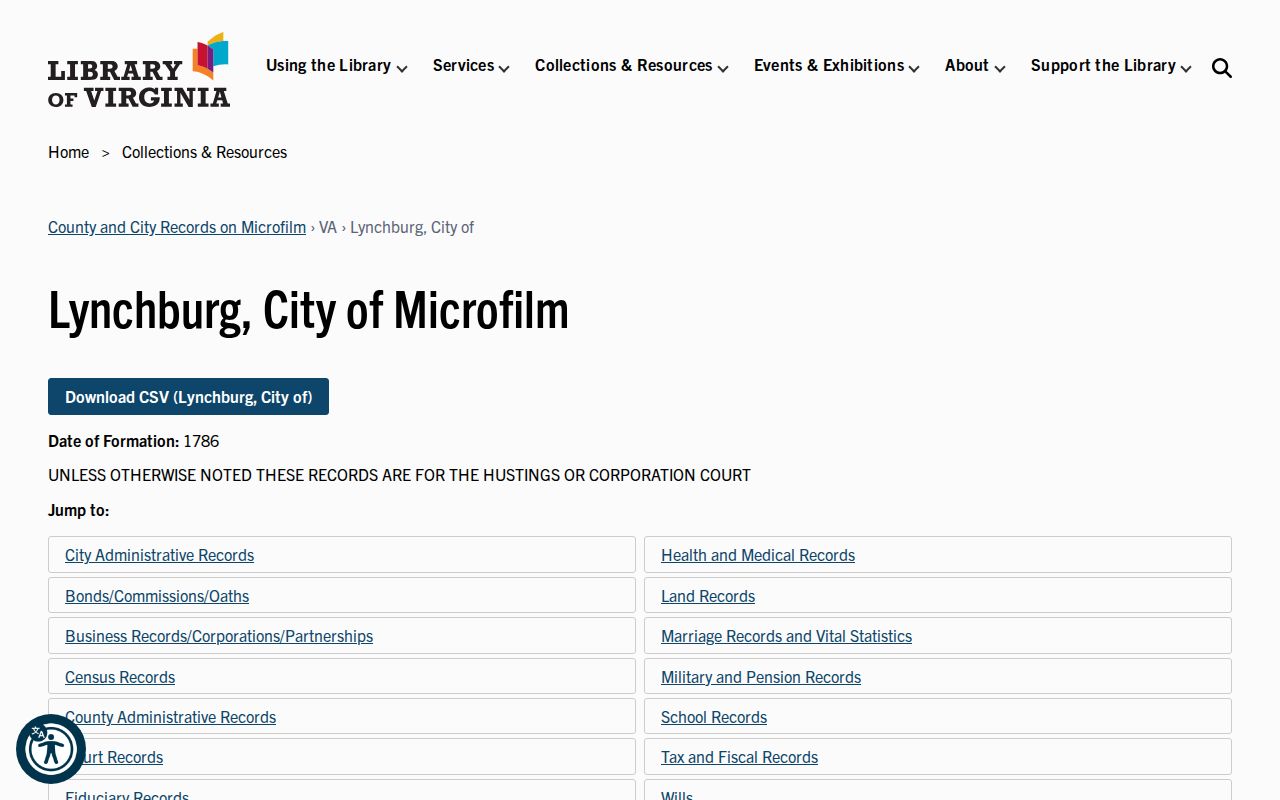
Use the guide to choose an index direction and record group, then verify the linked deed or clerk copy.
Lynchburg Past Residents in Directories
Jones Memorial Library's printed directory run reaches from 1873 forward. Selected scans include 1873, 1875-77, 1879-81, and 1909. In the 1909 Walsh directory, r means residence, spouse names can appear in parentheses, and a neighborhood can replace a numbered street. OCR can misread “74 Federal” as “74i Federal,” so the image and adjacent entries matter. The Lynchburg city-directory collection is the best place to learn the shelf and its entry conventions.
- Record the directory year, page, exact spelling, address wording, and every abbreviation.
- Read the volume's front matter before treating a residence marker, widow notation, or honorific as evidence.
- Compare adjacent directory years, not only a decade boundary, because a listing can disappear or change form after a move.
- Pair the address and directory household with 1900, 1910, 1920, 1930, 1940, or 1950 census evidence where available.
- Resolve a mismatch with the parcel, deed dates, street alias, historic map, and a second person-bearing record.
Directory absence is ambiguous. The person may have been omitted, listed under another spelling, placed at a business or boarding-house address, or outside the publisher's coverage.
Lynchburg Previous Residents and Maps
Sanborn maps can show that a structure stood on a lot and describe its footprint, materials, or use. DHR surveys identify Lynchburg editions for 1885, 1890, 1895, 1902, 1907, 1951, and 1955. They do not show ownership. Compare the map with the directory address, deed legal description, and permit route rather than treating the map as a resident list.
The city's eTRAKiT and construction application can carry parcel or PIN, property location, legal owner, work description, cost, area, stories, use, and completion estimate. A permit applicant can be a contractor or owner representative. Public historic permit-search coverage was not located, and the assessor staff map's Finaled Permits layer may retain permits for only 14 days. It is not a historical archive.
Old City Cemetery is one of Lynchburg's historical record settings and can help route a genealogy search after a household trail reaches an endpoint.
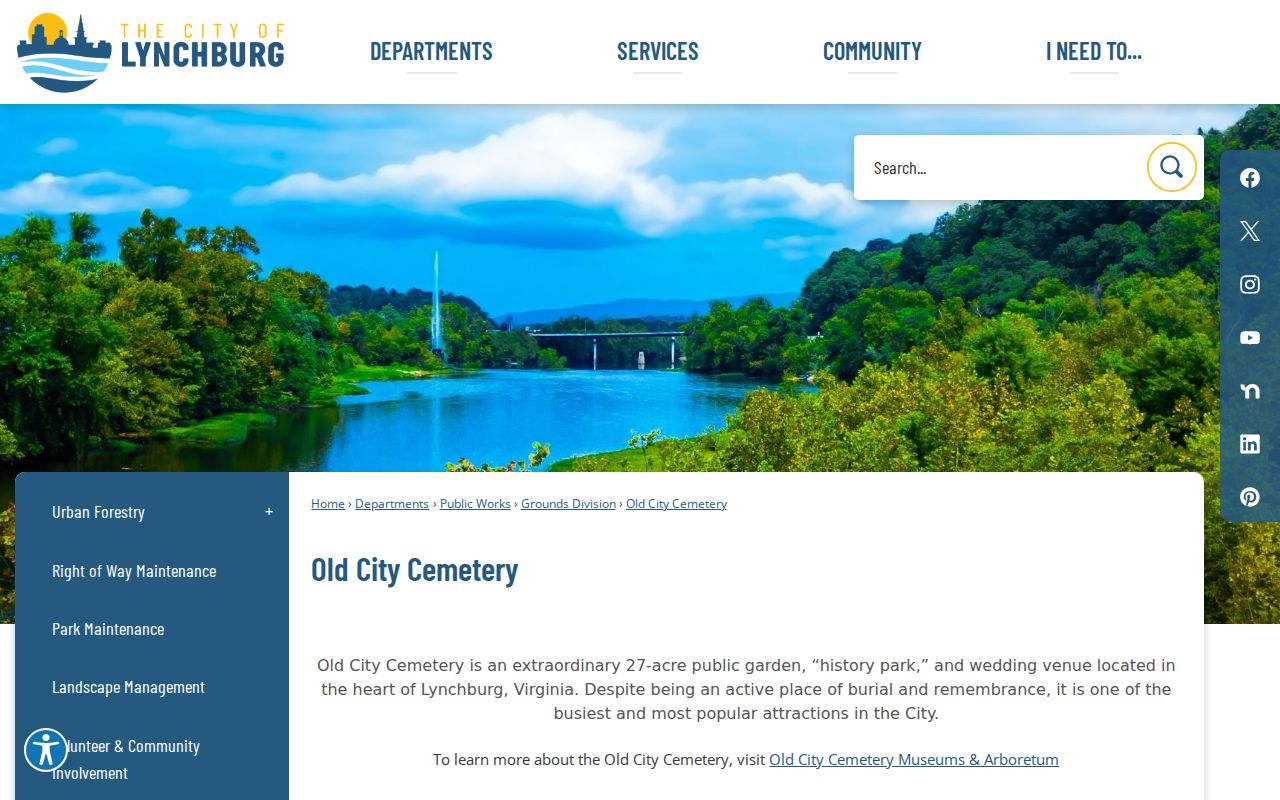
Cemetery context belongs at the end of a historical trail, not as proof that a person lived at a particular address.
Lynchburg Previous Address Changes
Local LynchburgHistory material describes a broad building renumbering in 1882 for free mail. The conversion page was not retrievable in one automated click, so it should be checked before a specific old-to-new number claim is made. Modern City Code Chapter 35, Article VII sets the current numbering framework and distinguishes streets that existed on August 1, 1977 from areas annexed later.
Keep the old number, current number, former street name, cross street, owner name, and legal description in your notes. The city's annexation-by-date GIS layers include 1786, 1852, 1870, 1900, 1908, 1926, 1940, 1958, 1964, and 1976. A house may remain on the same block while its municipal record context changes.
Lynchburg Previous Residents Endpoints
Once an address chain reaches a death, estate, or move, use the endpoint sources carefully. Jones Memorial Library's obituary index reaches from 1837 forward and includes obituaries, death notices, funeral notices, and paid notices. Local wills and probate resources can identify an executor, heirs, or a final address, while restricted or sealed portions may remain unavailable. The museum's digital resources also point to local wills and probate for 1809 through 1924.
Southern Memorial Association's record description lists 42 burial ledgers from 1820 through 1950, 14 plot books, 25 index books, and more than 57,000 entries. These are unusually deep local genealogy clues, not current-resident records.
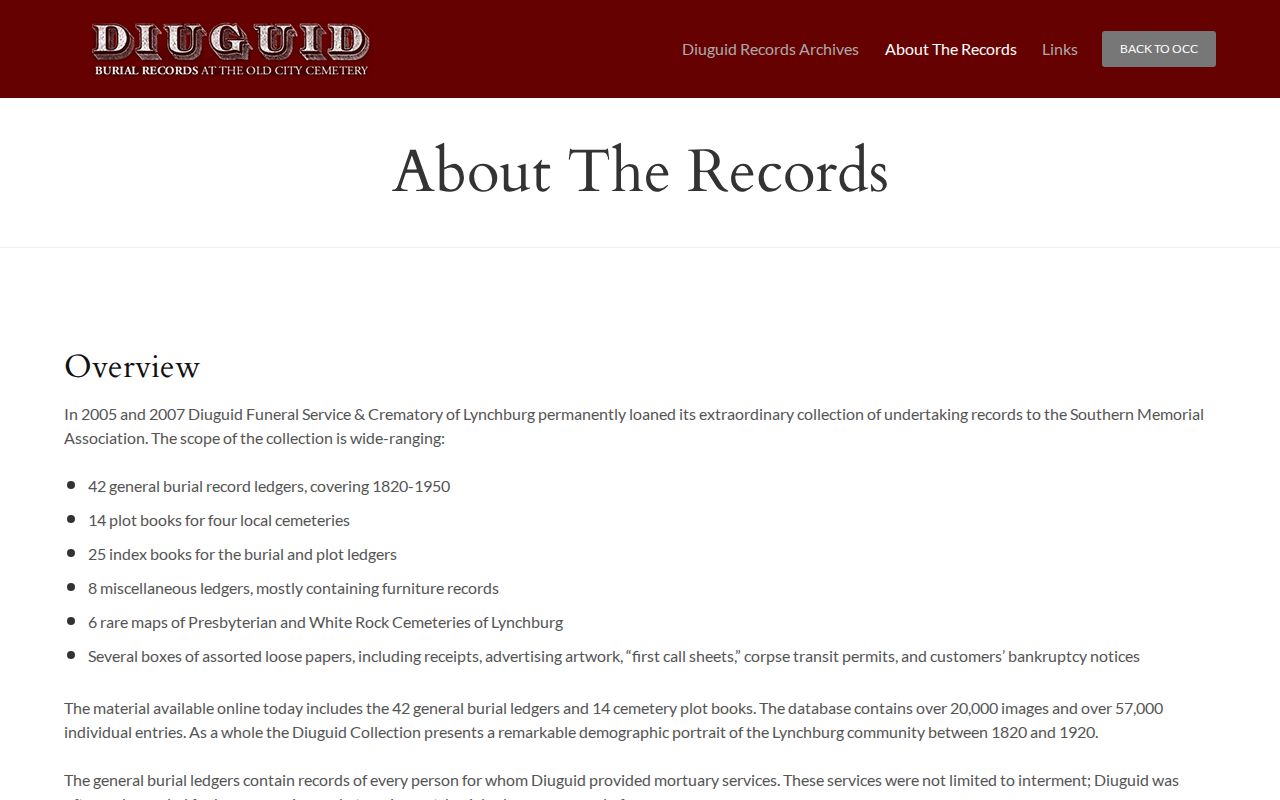
A ledger, obituary, or probate file can close a timeline, but it should not be used to publish unnecessary details about living relatives.
Lynchburg Past Resident Interments
Historic cemetery material can corroborate the last part of a family-history timeline. Southern Memorial's collection includes Diuguid materials and burial information, while FamilySearch holds Diuguid Funeral Home records from 1820 through 1971. JML also indexes Diuguid and First Call material. The known Old City Cemetery index end year differs between local descriptions, so check the actual index rather than assuming a single endpoint.
Spring Hill Cemetery's resident search offers another local interment route for a name found in an address trail.
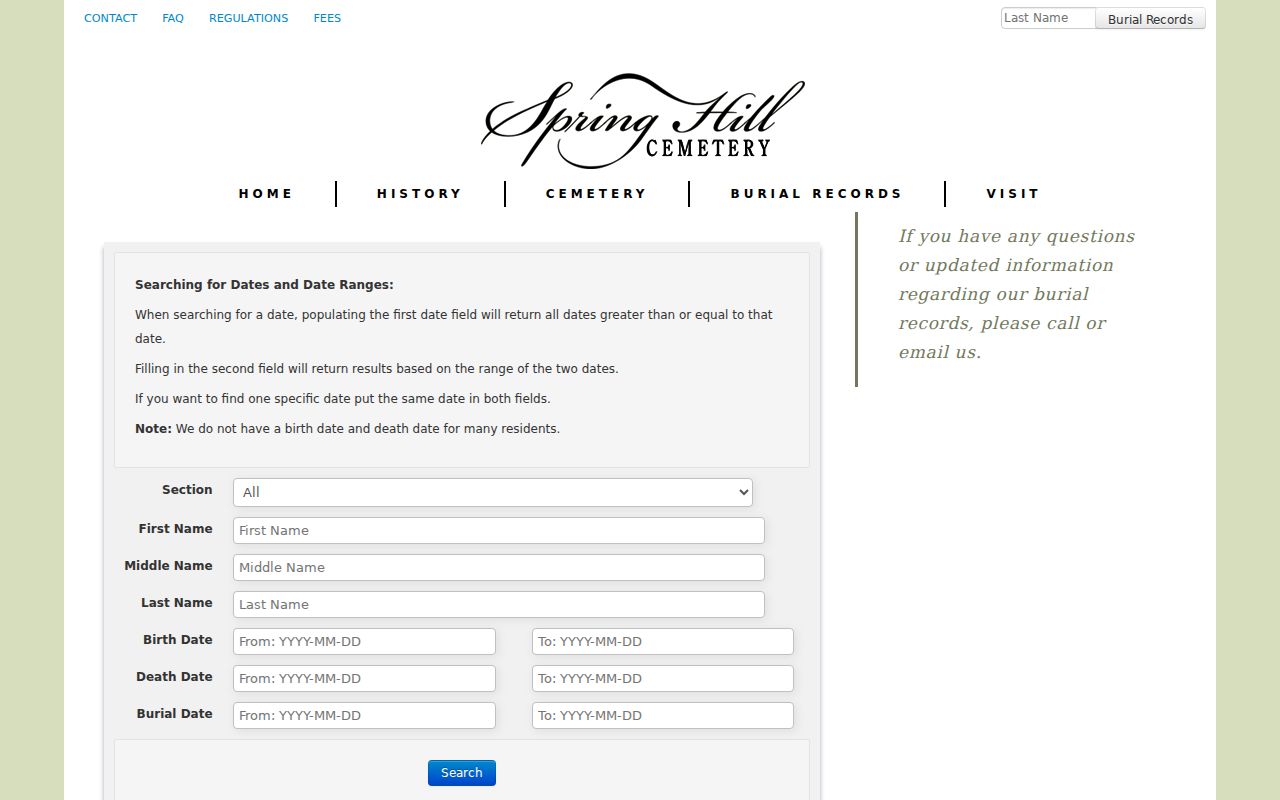
An interment record may add a death or plot clue, but it cannot independently prove an earlier household address.
Lynchburg Previous Residents Limits
Jones Memorial Library does not publish one consolidated house-history worksheet, but its research collections offer the pieces: directories, newspapers, obituary and funeral indexes, family files, cemetery indexes, manuscript finding aids, and more than 5,000 architectural-plan sets. Provide the modern and old address forms, rough construction date, deed-chain names, and neighborhood when asking for help. These collections are separate, so record the exact volume, page, or manuscript identifier for each result.
Lawful use. Lynchburg past-resident research is for house history, family history, estate questions, and personal curiosity. Do not use old records to stalk, harass, intimidate, or harm a living person, and do not republish protected details.
Public availability does not remove protected addresses, sealed files, or the need to verify a finding with the custodian. For a title or legal-description question, return to the Circuit Clerk's record and certified-copy process.