
Lynchburg City Directory Holdings
Jones Memorial Library is the main local shelf for historic Lynchburg city directories. Its research collection describes a continuous printed reference run from 1873 to the present, with annual volumes for people, businesses, and institutions. The books can record a household name, spouse or relationship notation, occupation or business connection, and residence. They are historical evidence, not a complete roll of everyone who lived in the city. Closed stacks, sign-in procedures, and the centralized Reading Room mean a researcher should ask a reference assistant for the correct volume rather than assume a book is on open shelves.
| Collection | Years | Where Held | Access |
|---|---|---|---|
| Printed Lynchburg city directories | 1873-present | Jones Memorial Library Reading Room | Free onsite use; closed stacks and sign-in |
| LynchburgHistory directory scans | 1873; 1875-76; 1876-77; 1879-80; 1881; 1909 | LynchburgHistory digital collection | Free online scans |
| FamilySearch cataloged directory runs | 1873; 1875; 1876-77; 1883-84 | FamilySearch catalog | Check catalog availability |
| Directory companions, newspapers, and microfilm | Varies by record group | Jones Memorial Library | Onsite research and staff service |
The Jones Memorial Library research collection also brings newspapers, obituaries, funeral material, census microfilm, and local manuscripts into the same research setting. That matters when a surname disappears from one annual volume. The absence may reflect a spelling change, a move, a boarding-house convention, a gap in the publisher's coverage, or an omission. A second record should support any conclusion about where a person went.
Jones Memorial Library's research page describes the local-history collection and its directory resources.

The library setting is useful because a directory result can be checked against a newspaper, microfilm reel, obituary index, or manuscript finding aid without treating one printed line as the whole story.
Lynchburg Directory Shelf at JML
Jones Memorial Library is at 2311 Memorial Avenue. Its listed hours are Tuesday 9 to 5, Wednesday through Friday 1 to 5, and Saturday 9 to 5. The collection is open during Lynchburg Public Library renovations, but researchers use a centralized Reading Room and should check in before requesting material. No library card is required for local-history-room work. The collection reports more than 20,000 books, about 600 manuscript collections, and four microfilm readers, so the shelf can support more than a single-name search.
Three public computers provide free onsite Ancestry Library Edition. The library also makes its obituary index and selected funeral or burial research available through staff services. Self-research is free, while the published service list gives a $10 price for an obituary listing and $10 for a First Call or Burial record. Bring the name, possible spelling variants, an approximate date, and any old street or neighborhood name. Ask staff to keep directory volumes, obituaries, and cemetery material separate in the notes, since each source records a different kind of fact.
Lynchburg Directories Online
The digitized LynchburgHistory directory collection provides local scans for 1873, 1875-76, 1876-77, 1879-80, 1881, and Walsh's 1909 directory. Those years are useful anchors, but they are not a substitute for the library's continuous print run. Search the scan, then inspect the image around a result. OCR can misread a street number or initial, and a nearby entry can supply the pattern that makes a hard-to-read line clear.
The digitized directory landing page shows the local online collection.
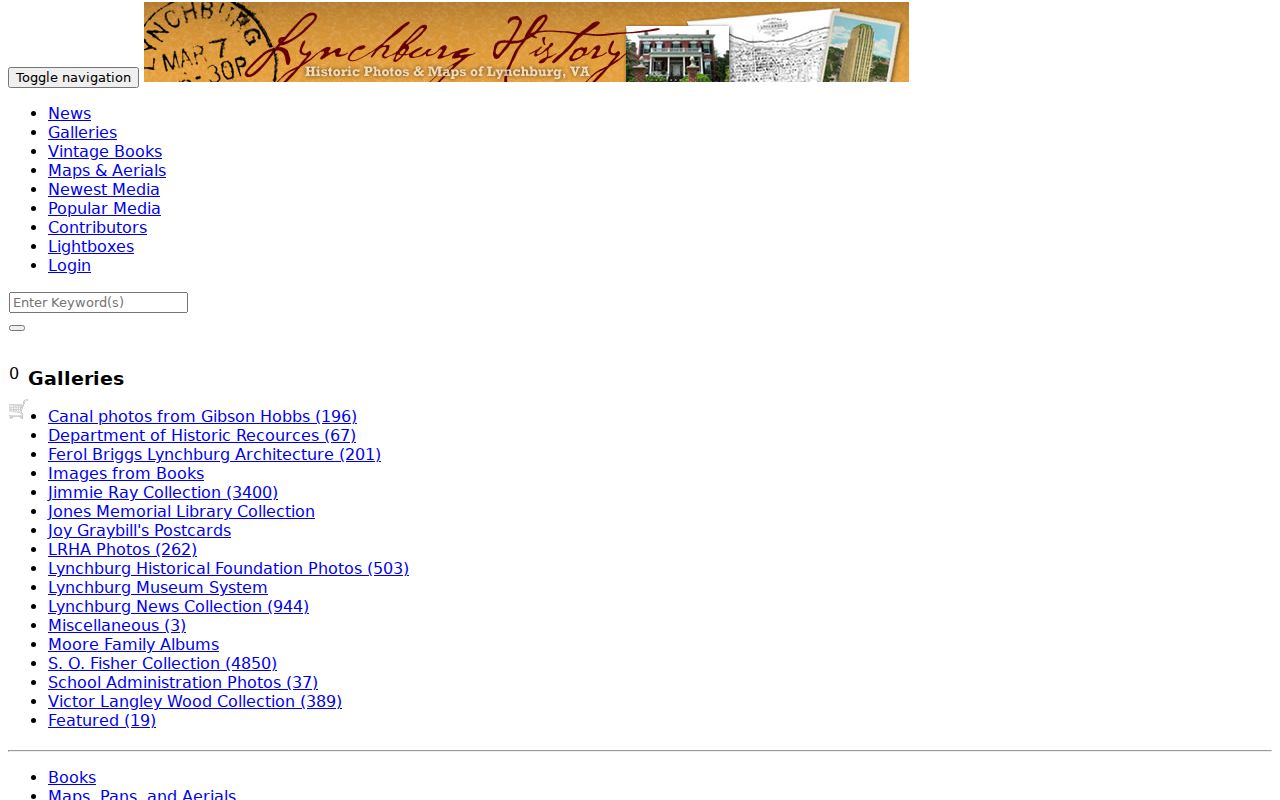
Use the digital volumes for an initial surname or street check, then record the directory year and page so the entry can be revisited in context.
- 1873: The earliest locally digitized directory also preserves municipal officers, wards, churches, and post-office context.
- 1875-81: Scans cover 1875-76, 1876-77, 1879-80, and 1881, creating several early annual comparison points.
- 1909: Walsh's scanned volume supplies a later entry format with residence, spouse, and occupation conventions.
- 1873-present: JML's printed reference run carries the yearly shelf beyond the years currently digitized online.
For a broader archive lead, the FamilySearch catalog lists Lynchburg directory runs and a gazetteer with material reaching Amherst, Appomattox, Bedford, and Campbell. Catalog coverage does not guarantee that every item is viewable from every location, so check the availability note before planning a visit or search.
Lynchburg City Directory Entries Decoded
A 1909 Walsh's directory page makes the abbreviations concrete. One entry gives a surname and abbreviated given name, a spouse in parentheses, a company or occupation, then r and a numbered street. Another uses wid to show a widow notation, while a different line gives only Madison Heights instead of a house number. The marks describe what the publisher printed. They do not establish legal title, current occupancy, or a family relationship beyond the wording shown.
| Headword | Printed surname, given name, initials, honorific, or capitalization style used by the publisher. |
|---|---|
| Parentheses | A spouse or family-name notation may appear, but it should be read as a directory convention. |
| Occupation line | A role, business, company, or abbreviated occupation can help distinguish similar names. |
| Residence line | r means resides or residence, followed by a street address or neighborhood label. |
| Widow notation | wid identifies the printed widow convention and can guide a later obituary or cemetery search. |
- Criss-cross method
- A way to reverse the question from a surname to a residence line or street. No separately bound reverse run was verified at JML, so check each volume's arrangement before relying on it.
- Householder entry
- The main listed name for a residence or household-style entry. It is not proof that every person at that address was listed.
- Abbreviation key
- The front-matter list that explains the publisher's shortened terms. Copy it with the entry, especially when initials or residence marks matter.
The inspected 1909 directory page shows surname clusters, occupations, spouse notation, and residence lines.
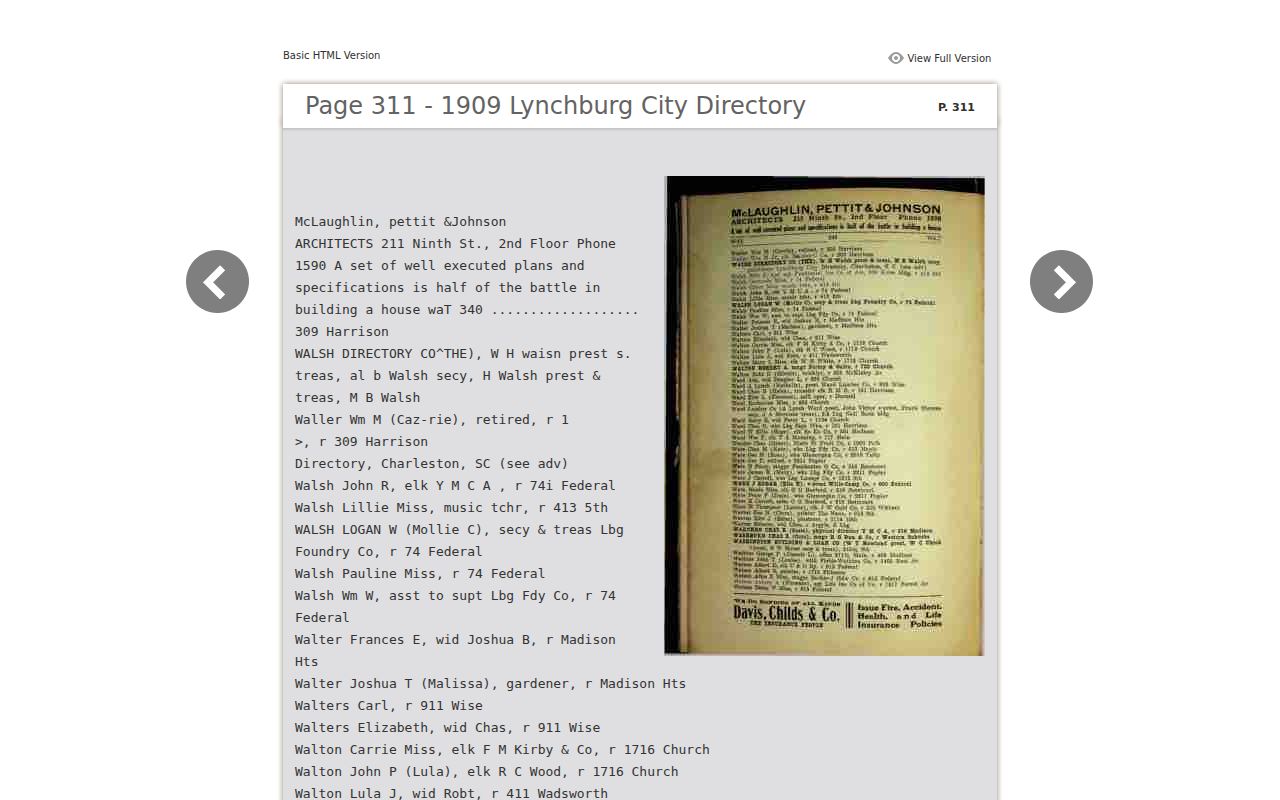
On that page, OCR renders one Federal Street address as “74i.” Comparing the scan with nearby entries is safer than repeating an OCR character as a historical fact.
Lynchburg Directory Gaps and Renumbering
Older Lynchburg directories need an address-continuity check. Local LynchburgHistory material identifies a broad city renumbering in 1882, but the linked conversion page was not available for a full automated check. Treat the year as a useful research lead, not a ready-made address conversion. Keep the printed number, former street name, cross street, owner name, legal description, and directory year together. A modern number alone can send a search to the wrong building or block.
The city GIS also holds annexation-by-date layers for 1786, 1852, 1870, 1900, 1908, 1926, 1940, 1958, 1964, and 1976. An address may keep a familiar neighborhood identity while its municipal record context changes. When an old residence line will not map cleanly, compare a Sanborn map, the directory year, a deed or plat, and the street alias rather than forcing a match. Note: A directory omission can mean a move, spelling change, publisher coverage gap, or indexing problem, so confirm it with another local source.
Lynchburg City Directory Companions
The Lynchburg Museum System provides another path when a directory name needs context. Its online collections database has a global “enter word or phrase” box and a Quick Search limited to Name and Title. Holdings include photographs, correspondence, diaries, business records, legal documents, postcards, and objects. A photograph or business record may explain a directory occupation or address, but it is a companion source, not a replacement for the printed volume.
The Lynchburg Museum collections search offers its phrase and Name/Title search controls.
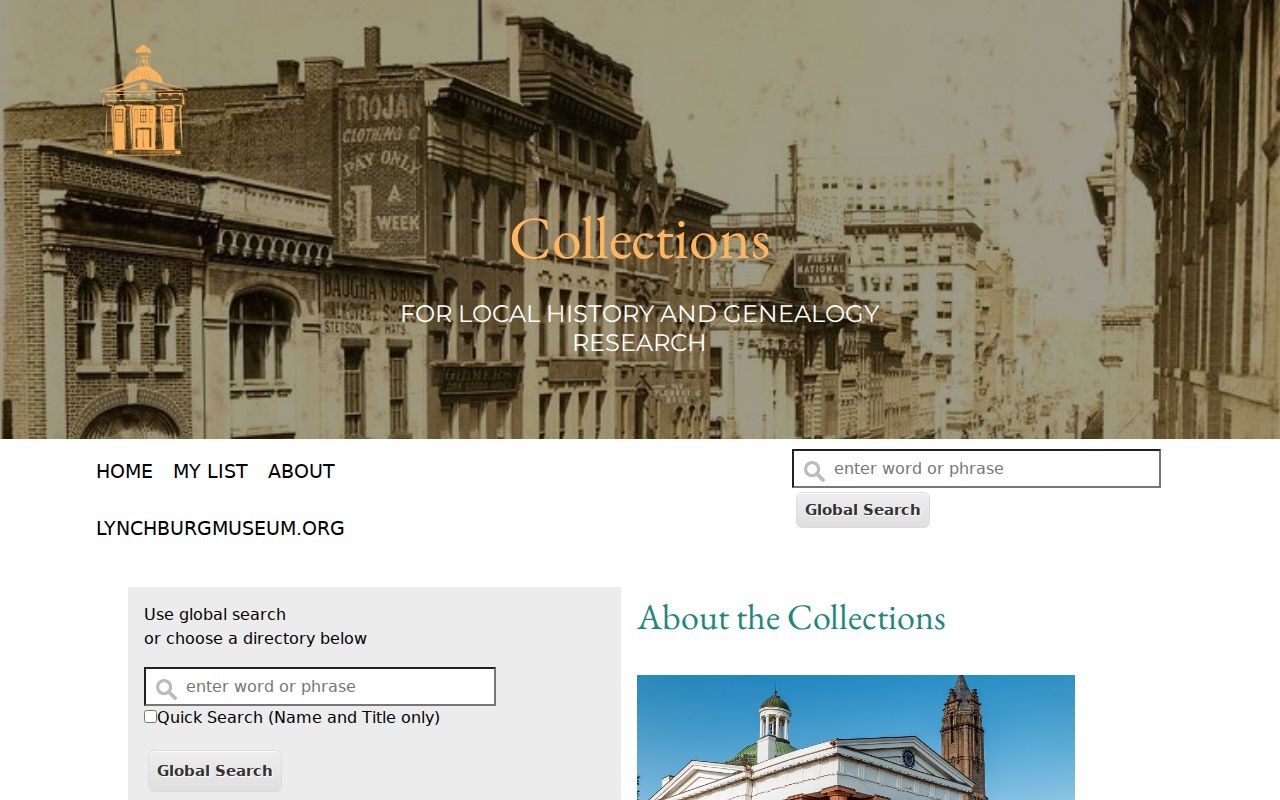
Search a surname, business name, or neighborhood term as printed in the directory, then save the collection identifier with the directory citation.
Museum digital resources also point to local directories and census, Virginia Chronicle, Chronicling America, FamilySearch, wills and probate, cemetery records, and map resources. Those separate links help test a directory entry without implying that all collections share one combined search.
The museum's digital-resources page gathers several historical research routes used beside Lynchburg city directories.

The resource list is most useful as a route to a second record, such as a census page, obituary index, probate item, or historic map.
Lynchburg City Directories and Cemeteries
When a person stops appearing in a city directory, JML's obituary index, funeral material, and cemetery records can help identify a later event without guessing. The library lists an obituary index from 1837 to the present and local marriage and death indexing for 1795 through 1836. Its research holdings include Diuguid Funeral records, Fauber First Call Sheets from 1914 to 1952, and funeral-home information reaching 1817 to 1999. Pair the printed residence with the exact directory year, then ask for the appropriate historical index.
The Southern Memorial Association describes a particularly deep Diuguid group: 42 burial ledgers from 1820 to 1950, 14 plot books, 25 index books, more than 20,000 images, and more than 57,000 entries. These are historical routes for family research, not a current-resident source. A cemetery or funeral hit can supply a death date, plot, or residence clue, while a directory preserves the annual address line that should be compared with it.
Trace Lynchburg City Directory Households
Build a year-by-year record rather than jumping from one decade to another. Write down the exact surname spelling, page, residence wording, occupation or business line, and every abbreviation. Then compare adjacent annual volumes. A name may reappear with a spouse, move from a numbered street to a neighborhood label, or be listed under a business or boarding-house convention. Census records are snapshots, while annual directories can show the changes between those snapshots.
- Start with the first directory year that has the known surname, street, neighborhood, or business role, and record its page and printed spelling.
- Read the front matter, then transcribe the residence line, initials, spouse notation, and occupation exactly as shown.
- Check the next available annual volumes, looking for address changes, surname variants, and nearby entries that clarify an OCR error.
- Pair the annual residence trail with the 1900, 1910, 1920, 1930, 1940, or 1950 census snapshots available under the federal release schedule.
- Use obituary, cemetery, deed, permit, or probate evidence to test a disappearance, death, transfer, or address change.
For a current address-keyed record chain, use the Lynchburg By Street directory after the historical name or address has been narrowed. Its parcel and deed route is different evidence from a historical residence line.
Lynchburg Record Gaps in Context
Lynchburg's historical record trail is strong but not seamless. The Library of Virginia notes missing city-council minutes from April 1838 through March 1851. A missing municipal volume does not mean a household or neighborhood left no trace. Check surviving newspapers, annual reports, directories, deeds, later minutes, cemetery material, and manuscript collections before concluding that an event did not occur. The city is independent of Campbell County, so an address near the boundary also needs a jurisdiction check before a researcher chooses a clerk or archive.
Keep the difference between an index and its underlying image clear. A directory index, OCR hit, or catalog record may point toward a page, book, or manuscript but may not reproduce all of it. The careful Lynchburg city directory trail is therefore a set of citations: source, year, page, exact printed wording, and the next local record used to test it.