
Finding Lynchburg Residents
Lynchburg has no single government household list. The useful records are held for different reasons: the assessor tracks parcels and recorded owners, the registrar maintains election records, the Circuit Court Clerk preserves deeds and court files, and Jones Memorial Library keeps historical directories. A name, a present street address, or an old house number calls for a different starting point. Treat each result as evidence of a recorded relationship at a particular time, not as a claim that every person at an address is known.
For a current ownership question, begin with the parcel. For a former household, begin with a directory year or the deed chain. For one named person, compare independent facts such as an initial, address, parcel identifier, date, and role in the record. A renter, minor, protected voter, or recent mover may not appear in the sources that are publicly searchable.
- Search the City Assessor's parcel route by owner name, property address, or parcel identifier.
- Check the Virginia voter portal only for an individual registration question, subject to its limits.
- Follow a recorded owner through the Circuit Clerk's deed index and save the book, page, or document reference.
- Use Jones Memorial Library's directory shelf for earlier address and household clues.
- Ask the custodian or submit a focused VFOIA request when an existing public record is not online.
Lynchburg Resident Records Offices
Lynchburg is an independent city, not part of Campbell County. That boundary decides the correct clerk, assessor, and court for a city parcel. The Circuit Court Clerk holds local land records, probate files, marriage material, and court records. The City Assessor and GIS services provide the tax-side and map-side clues. The Registrar handles local election services, while Virginia's state portal supplies individual voter-information functions.
Each custodian answers a narrow question. The clerk can confirm recorded instruments and copies, the assessor explains the ownership roll, and GIS explains layers and map data. Campbell County offices belong in the search only when the parcel is actually across the city line.
Lynchburg Parcel Search Clues
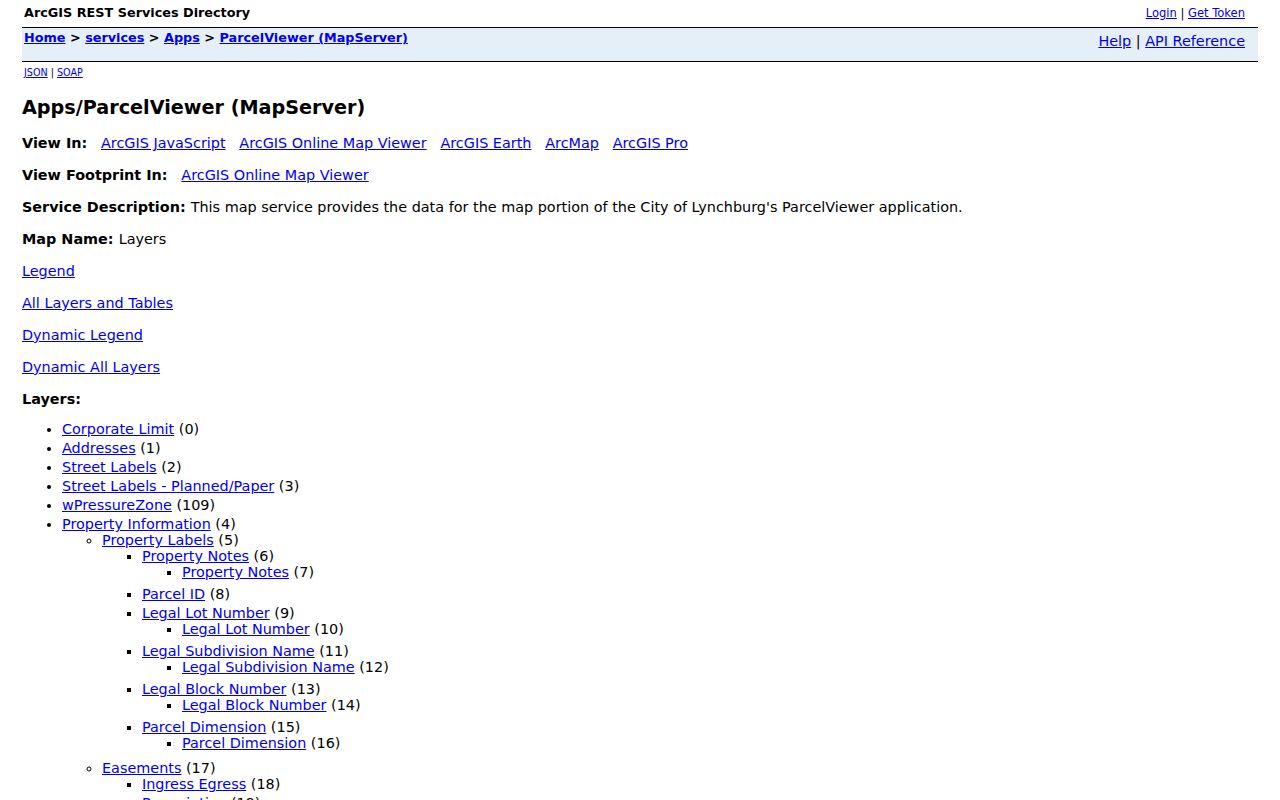
The City Assessor directs property research to the Parcel Viewer, which advertises owner-name, property-address, and parcel searches. The annual alphabetical ownership roll runs from July 1 through June 30, and transfers and permits are updated during the year. The public GIS schema identifies fields such as Parcel_ID, LocAddr, LocZip, Owner1, and Owner2. A parcel owner is not automatically the occupant, and a mailing address is only the address used for tax correspondence.
| Owner name | Recorded ownership clue, not proof of residence. |
|---|---|
| Situs address | Physical location of the parcel. |
| Parcel_ID | Identifier that connects map work to deed and plat research. |
| Legal description | Lot, block, subdivision, or other deed language that survives a street-number change. |
The GIS Parcel Viewer layers show boundaries, zoning, wards, precincts, historic districts, flood areas, ZIPs, and annexation dates. The image below shows the map-service environment; it is a discovery tool, not a survey or a legal representation.
Use a recorded deed or certified clerk copy when the question turns on title, a plat, or the exact legal boundary.
Lynchburg Deed Records by Date
The Circuit Clerk's deed page describes local land records reaching back to 1805. The paid Virginia Secure Remote Access system, or SRA, provides deeds and land records from 1956 forward, while special grantor and grantee index books cover 1937 through 1978. Older books and indexes are part of the in-person and Library of Virginia route. That layered coverage matters when a modern parcel trail suddenly stops online.
Search the current owner as grantee, read the purchase record, then search the seller as a prior grantee. Record both the instrument date and recording date, the book or document number, the legal description, and plat references. An index points to a record; it is not the certified record itself. SRA is inquiry-only and requires a subscriber account, notarized application, and payment.
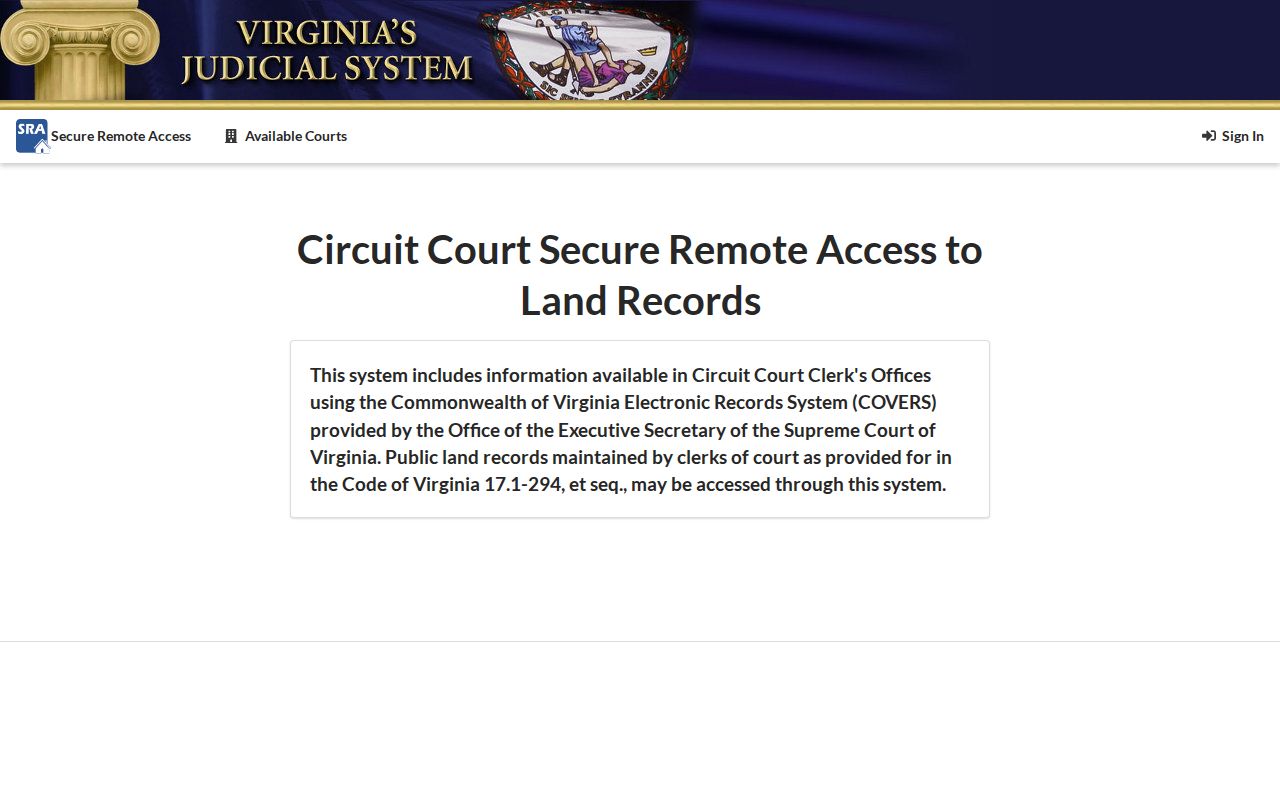
The Virginia SRA entry page is the online gateway for participating clerk records. The application documents the coverage and access rules, but public pages do not expose a complete live field list.
The clerk's public-records room remains the sound fallback for older books, plat questions, certified copies, and records outside the online image range.
Lynchburg Court Search Fallback
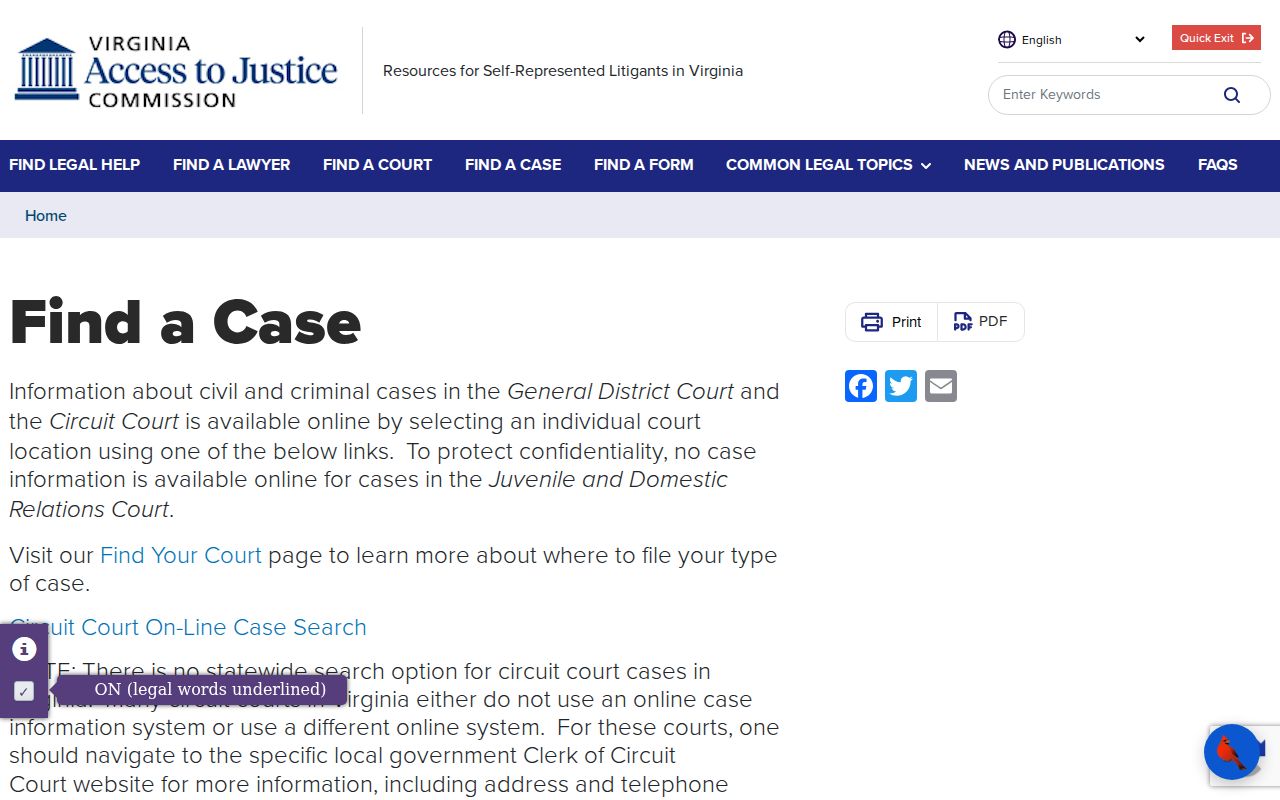
Virginia's case-information instructions route a searcher to locality-specific Circuit and General District systems. The inspected Circuit link returned a 403 and the General District route used a captcha or redirect, so unverified field labels should not be guessed. Juvenile and Domestic Relations information is not part of that ordinary public web search.
When an online court search cannot be completed, call the Circuit Clerk at 434-455-2620 or use the public-records room. Ask whether a file is public, sealed, archived, expunged, or held by another division before requesting a copy. A case index can identify a case number or party role, but pleadings, exhibits, addresses, and dispositions may have different access rules. A granted expungement is removed from court records under the city's civil-case guidance.
The official court-search chooser is shown below. It helps select a court channel but does not replace a clerk's confirmation or a copy request.
Federal matters use the Western District of Virginia and PACER, which are separate from the Lynchburg city court indexes.
Lynchburg Voter Record Limits
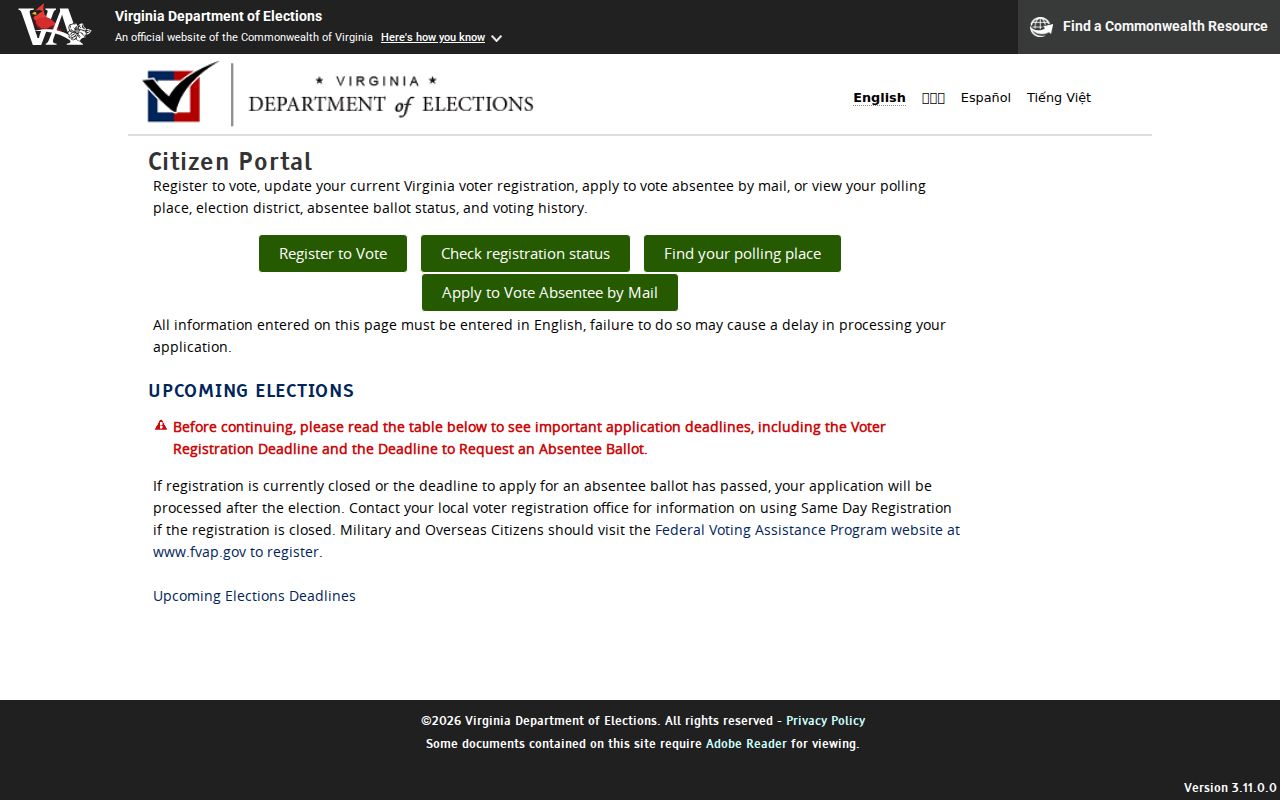
The Virginia Citizen Portal offers registration, update, polling-place, absentee, and voting-history functions. It is designed for an individual verification, not a street-wide household roster. At the Registrar's office, the public list may show name, residence address, year of birth, gender, and election districts under Virginia Code §24.2-444.
Social Security numbers, full dates of birth, protected addresses, and other registration materials are not part of ordinary public access. Virginia's protected-voter provisions and Address Confidentiality Program can replace or withhold a residence address. A result confirms only the record relationship at its date. It does not establish present occupancy, family ties, or every person at the address.
The portal screen below is a starting point for an individual voter-information question. The local Registrar provides an in-person, mail, and election-service fallback.
For a controlled voter-list request, use the Department of Elections form and its requester eligibility and use restrictions rather than assuming a portal result can be exported.
Lynchburg Vital Index Windows
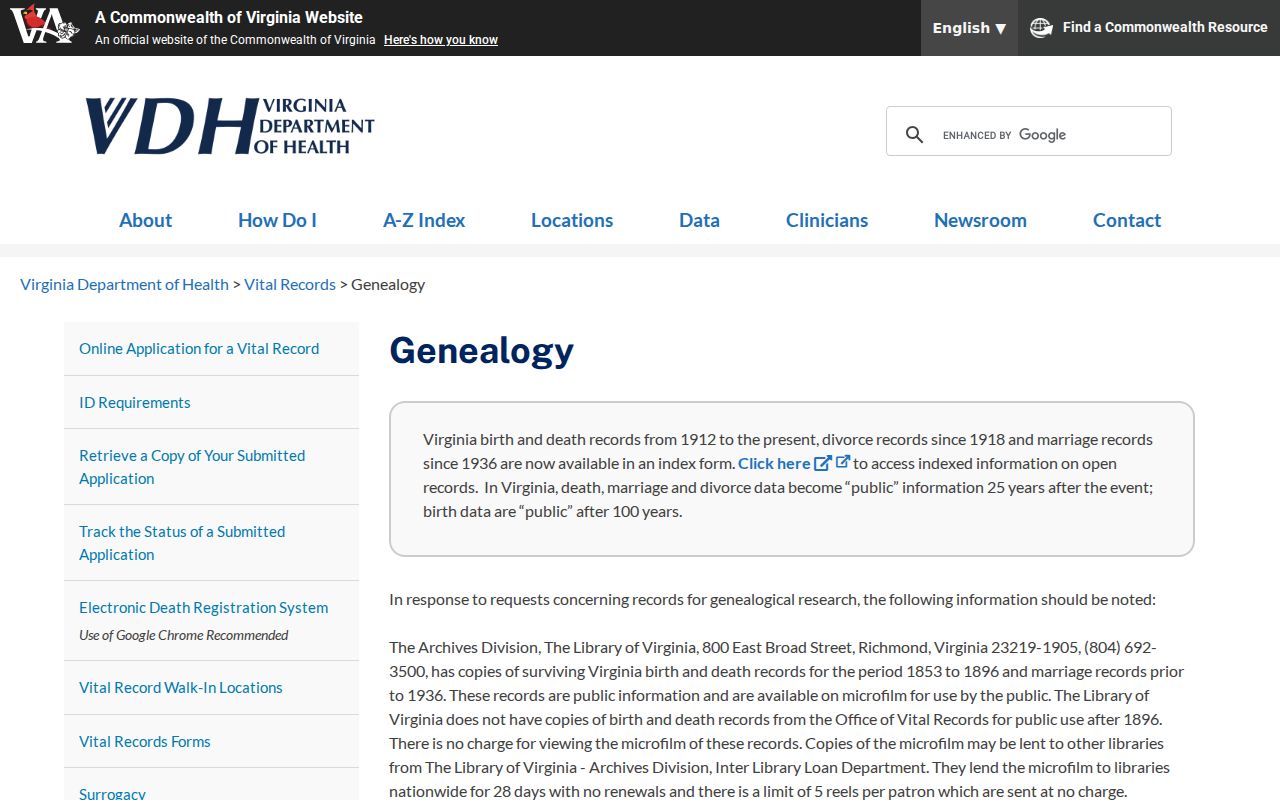
Virginia Department of Health genealogy resources distinguish public indexes from certified copies. Birth records become public after 100 years. Death, marriage, and divorce records become public after 25 years under Virginia Code §32.1-271. VDH indexes include births and deaths from 1912, divorces from 1918, and marriages from 1936, with older material available through Library of Virginia routes where it survives.
Restricted-period requests require the required written request, identification, eligibility, and fee. The Lynchburg Health Department is the local registrar location, but VDH controls statewide issuance and genealogy rules. A vital index may confirm an event name, place, or date without making every certificate detail available. For a city event, use “Lynchburg city,” not Campbell County, in the locality field.
This VDH genealogy page is a practical place to confirm the current public-period rules and request channels before planning a visit or mail request.
Library microfilm, obituary indexes, and cemetery material can support family-history questions, but they do not substitute for a certified vital record.
Current Lynchburg Resident Directories
Several public sources act like partial resident directories, but each describes a different relationship. The owner roll follows parcels. A voter record addresses registration. A deed index records parties to an instrument. Court and license records answer narrower questions. The city staff directory is a directory of public contacts, not a list of city households. The right source depends on whether the question is ownership, an official filing, civic registration, or a historical presence.
| Record source | What it can show | Custodian | Access route |
|---|---|---|---|
| Parcel and ownership roll | Owner, parcel, and situs clues | City Assessor | Free Parcel Viewer |
| Voter information | Individual registration functions | Virginia Elections / Registrar | Portal or registrar office |
| Recorded deeds | Grantors, grantees, dates, legal descriptions | Circuit Court Clerk | SRA, records room, LVA |
| Court indexes | Public case identifiers and party roles | Local courts | Portal where available, clerk fallback |
| Historical directories | Annual residence and occupation clues | Jones Memorial Library | Reading Room and digital runs |
Official records usually offer a stronger explanation of source and date than commercial people-finder products, which can combine stale or mismatched data behind a paywall. For a one-person confirmation trail, use the focused Lynchburg resident lookup workflow and compare more than one independent record.
Lynchburg FOIA Request Route
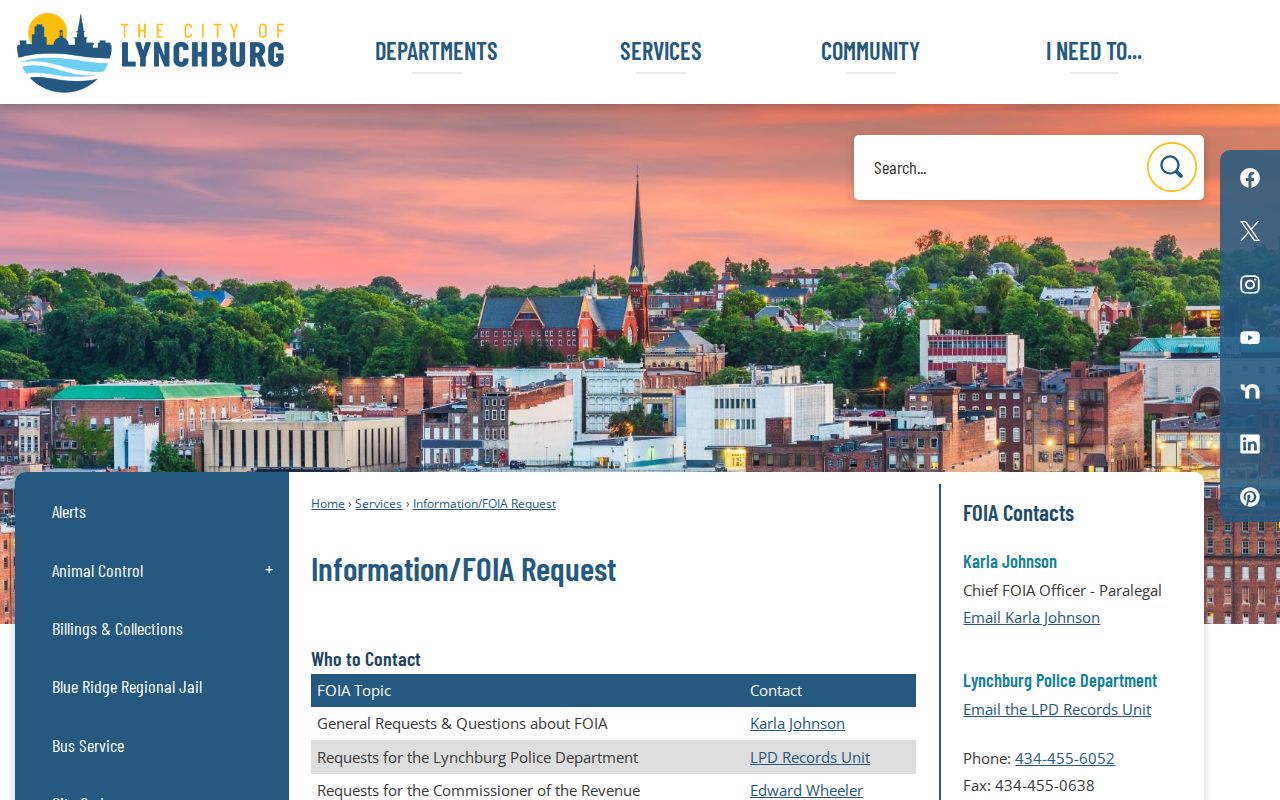
When a city record is not available online, the Lynchburg FOIA page explains how to ask for existing records by mail, fax, email, in person, telephone, or its online route. A request should identify the records with reasonable specificity. The city does not need to create a new list or answer a research question in place of producing an existing record.
Virginia FOIA, Code §§2.2-3700 through 2.2-3714, generally requires a response within five working days: provide records, cite an exemption, release redacted material, state that records do not exist, or explain why more time is needed. Actual search, production, copying, postage, and related direct costs may apply. The city can require a deposit for an estimate above $200.
The request page below provides the official contact route. It is most useful when the precise record, department, date range, and subject are known.
Library patron records, utility accounts, tax returns, complaint-maker information, and protected personal data are among the kinds of records that can be exempt or redacted.
Lynchburg Library Research Shelf
Jones Memorial Library is the main local-history stop for address and family research. Its Reading Room holds a printed Lynchburg city-directory run described as 1873 to the present, along with newspapers, obituary indexes, funeral material, census microfilm, manuscripts, architectural plans, and local collections. The library lists free public use, closed stacks, reference assistance, three computers with Ancestry Library Edition, and four microfilm readers.
Directories can record a surname, spouse notation, occupation or business connection, residence, and address. An absence can mean a spelling variation, a different section, an omitted household, or a gap in the publisher's coverage. Pair a directory year with a deed, census snapshot, obituary, or map before drawing a conclusion about a move or family relationship.
- Roll
- A list created for a specific public purpose, such as ownership or voter registration.
- Index
- A finding aid that points to a record, often by name, date, book, or page.
- Criss-cross directory
- An address-oriented way to work back from a residence line to a name.
- Parcel
- A mapped unit of property tied to tax and legal-description records.
Lynchburg ZIP Boundary Checks
ZIP codes are postal labels, not city boundaries or resident counts. The primary Lynchburg delivery ZIPs discussed in the 2026 USPS audit are 24501, 24502, 24503, and 24504. The city GIS ZIP layer also includes small or edge areas marked 24513, 24515, and 24551. Postal labels such as 24505 and 24506 appear in USPS material but were not verified as city-limit ZIP areas.
Use the USPS ZIP Code Lookup for an address-by-address postal result, then use the city parcel and corporate-limit layers for local jurisdiction. A city-clipped GIS polygon does not describe the whole postal route. Likewise, a Census ZCTA is a statistical approximation and should not be substituted for a delivery area.
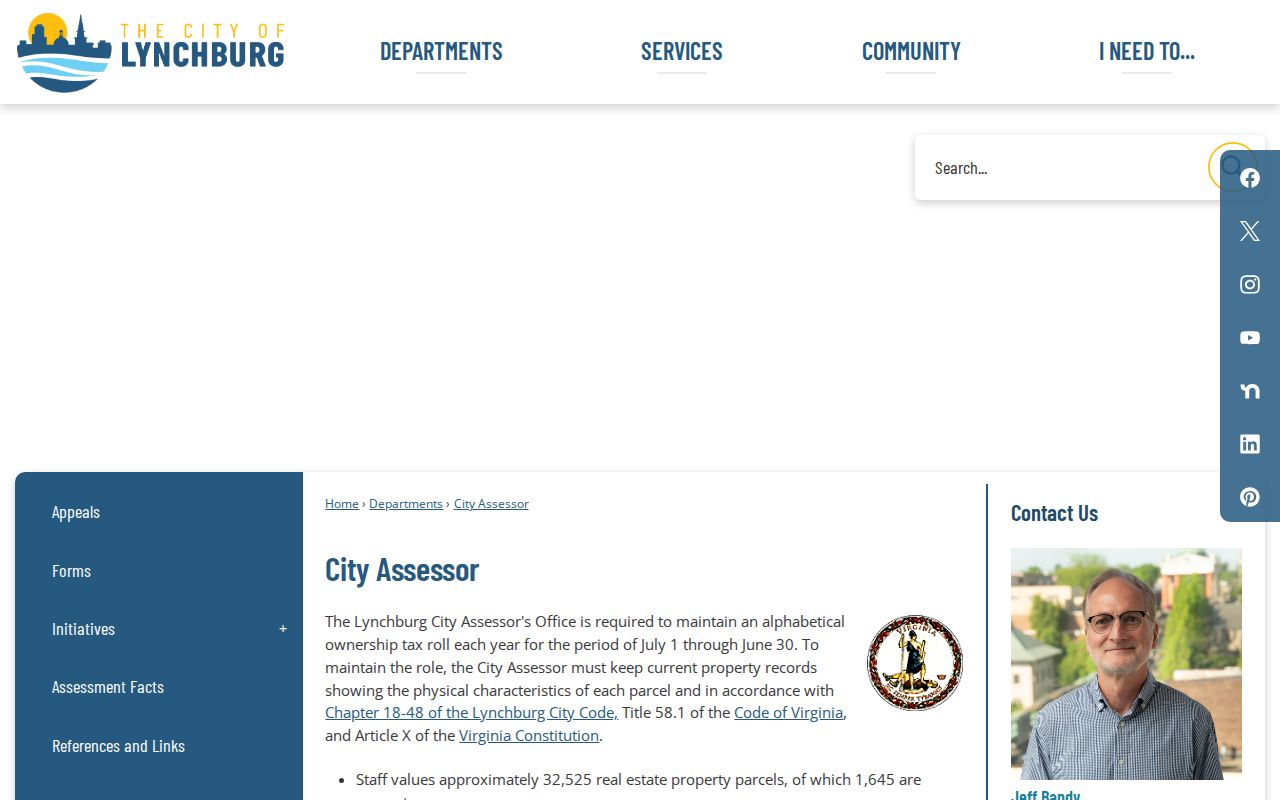
The City Assessor page below leads to the owner, address, and parcel search that helps separate postal geography from the parcel's official city record.
Keep ZIP, ward, precinct, situs address, and legal description as separate fields when checking an address.
Lynchburg Search Safety Limits
Public access has firm boundaries. Virginia's Address Confidentiality Program protects an eligible participant's actual address, and protected-voter rules can withhold or substitute a residence address. City records also protect utility accounts, library patron information, certain complaint-maker details, personnel information, and individual tax returns. DMV records are restricted by federal law.
When an official record appears wrong, take the exact record number and supporting evidence to the custodian and ask for its correction process. A VFOIA request seeks existing records; it does not force an office to rewrite a historical record. Preserve the source date and the role a record shows instead of assembling weak matches into a single identity.
Lynchburg State Custody Searches
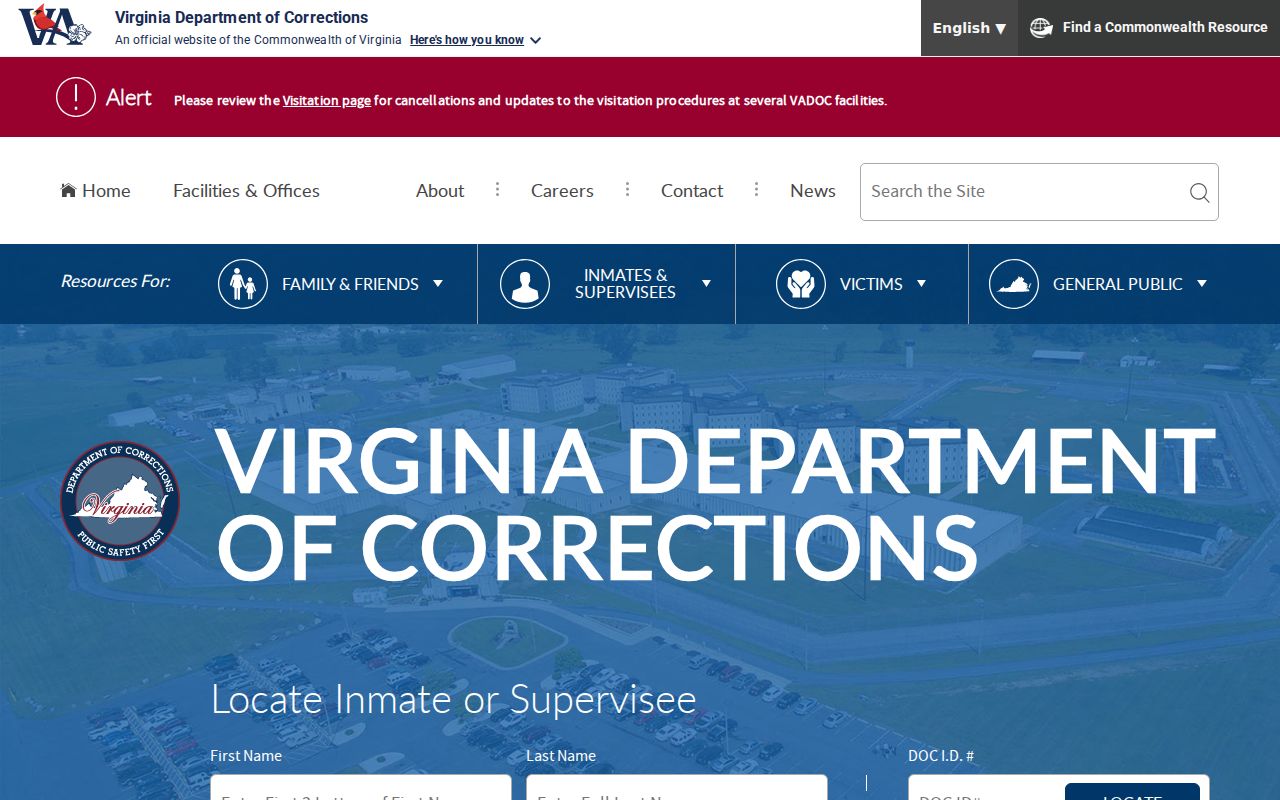
A custody question is not a resident lookup. The Virginia Department of Corrections locator is the official state-prison route and is updated daily, but it does not replace a local booking record, court docket, or home-address record. The Blue Ridge Regional Jail Authority serves Lynchburg, yet no official public roster was located during the research pass.
The VADOC locator screen below is useful only for its stated custody scope. A no-result does not establish that someone has never been in custody or currently lives elsewhere.
For a local report or incident request, use the Lynchburg Police Department's documented request procedure and its eligibility rules rather than treating a custody search as a person directory.
Historic Lynchburg Directory Records
Lynchburg's historical record trail has useful depth but real gaps. The local deed series begins in 1805, and Library of Virginia notes that city-council minutes from April 1838 through March 1851 are missing. Printed city directories begin in 1873, while digitized local runs include 1873, 1875 through 1877, 1879 through 1881, and 1909. These dates describe collections, not uninterrupted proof about a person.
Local street-history material also identifies an 1882 building renumbering. Older directories may use a prior number, a former street name, or a neighborhood label. Compare cross streets, deed descriptions, Sanborn maps, directory years, street aliases, and annexation layers rather than forcing an old entry into a modern number. The full historical shelf is covered by the Lynchburg city directories page.
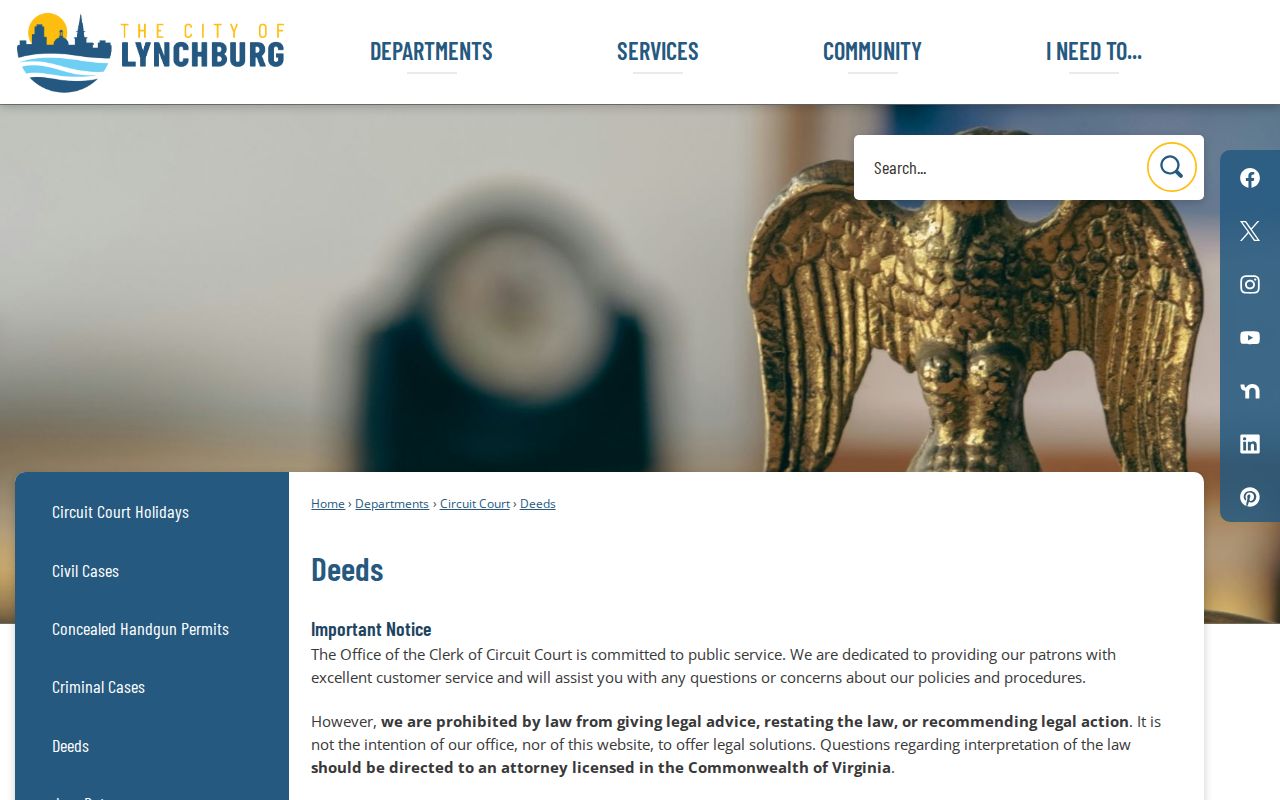
The current deed-access page below is a reminder that modern online systems sit on top of older books, indexes, microfilm, and clerk-counter research.
For older names and addresses, retain the volume, page, spelling, and exact source date so a library or clerk staff member can reproduce the trail.